
How To Make Wedding Ceremony Wording More Inclusive
Small wording choices can help your wedding feel respectful and true to your relationship.
Key Takeaways
- Inclusive wedding wording helps the ceremony reflect the couple as they are instead of forcing them into old gender roles or outdated terms.
- Some common wedding phrases are not inclusive, such as “bride and groom,” “husband and wife,” and “who gives this woman.”
- Inclusive wedding ceremony language could include saying “spouses” or “married,” and replacing lines like “Who gives this woman?”
Many standard wedding scripts use phrases like “bride and groom,” “husband and wife,” or “who gives this woman.” Those gendered lines may work for some couples, but they don’t fit many LGBTQ weddings. In most cases, you can make a few edits to create an inclusive wedding ceremony script that feels more natural to you.
Why Does Inclusive Wedding Ceremony Wording Matter for LGBTQ Couples?
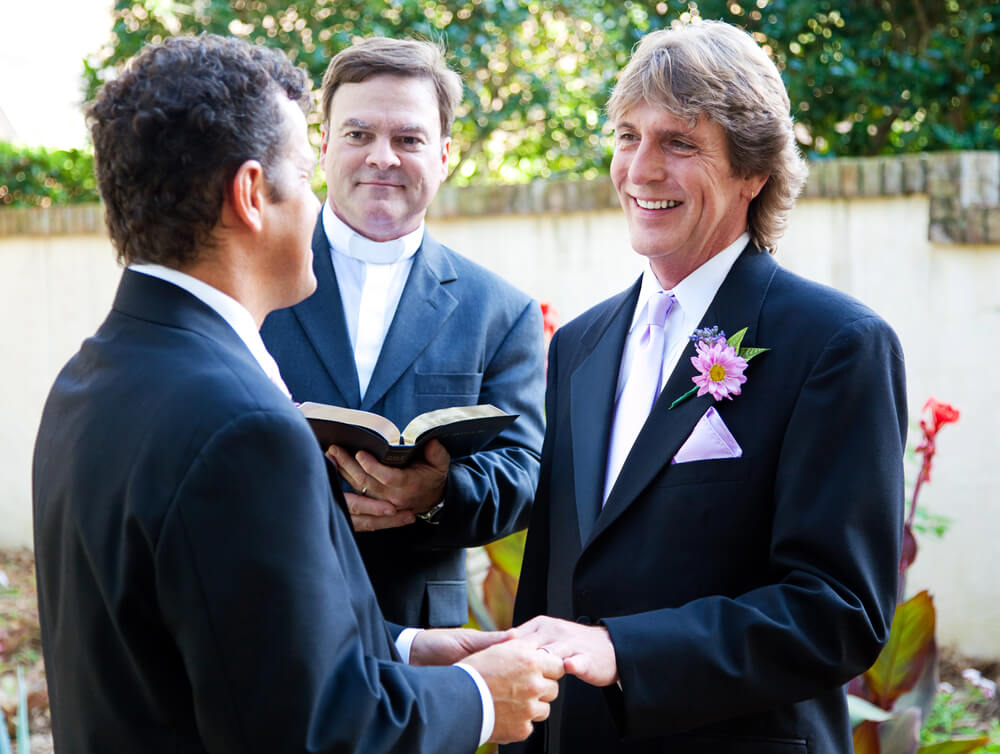
Terms like “bride and groom” or “husband and wife” may not reflect how many LGBTQ couples identify. Traditional ceremony scripts are often built around heterosexual and gendered assumptions, which can leave same-sex couples, nonbinary partners, and couples with a trans partner trying to fit into language that was never written with them in mind.
The same goes for lines that cast one partner in a more traditional gender role or suggest one person is being given to the other. Inclusive wording helps the ceremony reflect the couple as they are instead of asking them to adapt to an outdated script.
How Can You Replace Gendered Marriage Ceremony Wording?
To make your wedding script more inclusive, start by reading line by line and flagging any phrase that assumes a traditional male-female structure. Then swap those lines for wording that is direct and flexible.
Common changes include:
- “Bride and groom” to “the couple“ or each partner’s name
- “Husband and wife” to “married,“ “spouses,“ “wives“, or “husbands“
- “Who gives this woman?” to a family blessing or a mutual welcome
- “Do you take this man/woman?” to “Do you take [Name]?”
The wording should sound like it belongs to you and your partner, using the names, promises, and relationship terms you actually use in real life.
How Should You Choose Inclusive Terms for Vows and Pronouncements?
For wedding pronouncements, some couples want “wives” or “husbands.” Others prefer “spouses” or “partners.” Many couples use clear lines like:
- “I now pronounce you married.”
- “I now pronounce you spouses.”
- “I now pronounce you wives.”
- “I now pronounce you husbands.”
When writing your vows, look for places where the script suggests unequal roles or old expectations. Then replace them with language that feels mutual. For example, both partners can make the same promises about support, respect, and commitment rather than using different vow language for each person.
Should You Review the Ceremony Script With Your Officiant?
Ask for the full ceremony script before the wedding day. Seeing the full wording makes it much easier to catch terms that don’t feel inclusive.
Review these details with your officiant:
- Names and pronunciation
- Pronouns
- Relationship terms
- Vow wording
- Pronouncement wording
- Any family or faith language that needs adjusting
Reading the script out loud helps, too. A line that looks fine on paper may sound awkward once it’s said during the ceremony.
Choose a Wedding Officiant Who Will Use Inclusive Language
Inclusive wedding ceremony wording only works when the officiant can carry it through with respect. That means using the right names, pronouns, and relationship terms while also making sure the ceremony meets local requirements. The Universal Life Church makes that easier by offering free online ordination, lifetime credentials, and resources that cover how to structure the ceremony and make the marriage legal.
Ask a loved one to get ordained through The Universal Life Church so they can officiate your inclusive wedding.